If you’ve ever left a toxic relationship and wondered, “Why does my body still react like he’s here?” — you’re not alone.
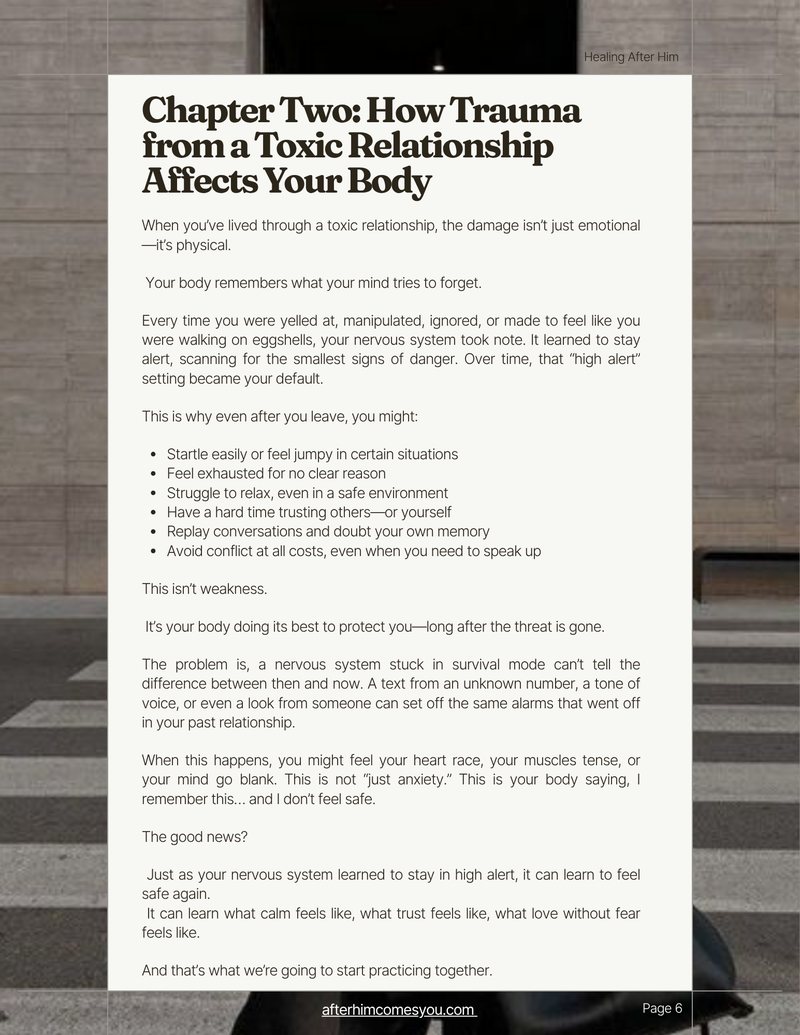
Toxic love doesn’t just break your heart. It rewires your nervous system.
Your body learns how to survive the chaos long before your mind understands what happened. Even after you leave, the patterns stay alive inside you — showing up as anxiety, hypervigilance, shutdown, or feeling “on edge” for no logical reason.
These responses aren’t weakness. They’re conditioning.
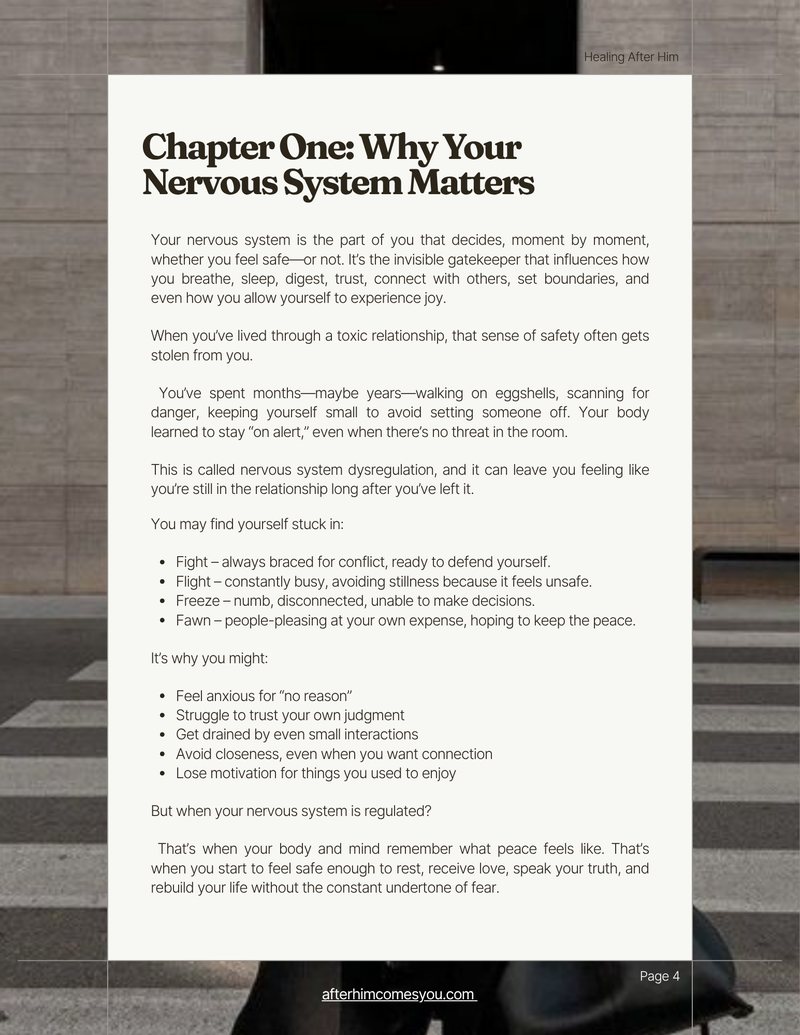
Here are 3 things toxic love teaches your nervous system — and how you can gently unlearn them as you heal.
“Love = Anxiety”
When love comes with:
- mood swings
- unpredictable behavior
- cheating or lies
- being blamed for things you didn’t do
- emotional highs followed by painful lows
…your nervous system stops associating love with safety. Instead, it learns to anticipate danger.
That’s why after toxic love:
- Calm people feel “boring”
- Consistency feels suspicious
- Safety feels unfamiliar
Your body expects chaos even when nothing is wrong. This isn’t because you’re broken — it’s because your body adapted to survive instability.
How to Unlearn It
Your body has to experience safe love again — slowly, consistently, and without pressure. Start by:
- Practicing emotional regulation daily
- Doing grounding exercises when anxiety rises
- Letting your body feel neutrality without panicking
- Reminding yourself: “Calm is not a threat.”
You don’t need to rush into love again. Start by giving your nervous system the one thing it never got: peace.
“Silence = Punishment”
Silent treatment. Withdrawal. Stonewalling. Coldness when you needed connection.
These behaviors teach your nervous system that silence is dangerous. So after leaving:
- A delayed text can make your stomach drop
- A quiet room feels tense
- Time alone triggers spiraling thoughts
- Your body braces for rejection
Your nervous system isn’t afraid of silence itself — it’s afraid of what silence used to mean.
How to Unlearn It
You have to teach your body that silence can be neutral… or even nourishing. Try:
- Intentional quiet moments paired with grounding
- Slow breathing during moments of stillness
- Creating calm rituals (tea, journaling, soft music)
- Replacing old interpretations with new truths
Silence is no longer danger. It’s where you reconnect with yourself.
“Connection = Danger”
After being with someone who:
- controlled you
- blamed you
- gaslit you
- made you question your worth
- punished vulnerability
- used your openness against you
Your nervous system learns that closeness = pain. So even when you meet safe people, your body may:
- Shut down emotionally
- Keep distance
- Feel uncomfortable being seen
- Sabotage connections
- Assume the worst
This isn’t self-sabotage — it’s self-protection.
How to Unlearn It
Healing happens through gentle exposure to safe connection — starting with yourself. Practice:
- Self-compassion
- Being honest about your needs
- Slow rebuilding of trust
- Setting boundaries that reinforce safety
- Noticing when your body reacts from old conditioning
As your nervous system realizes, “I’m safe now,” connection stops feeling like a threat and begins feeling like a possibility.
Final Thoughts: Your Nervous System Isn’t Broken — It’s Exhausted
Nothing about your reactions is “dramatic.” Nothing about your sensitivity is “too much.” Your body did everything it could to protect you.
Now it deserves to rest.
Relearning safety takes time… but with the right tools, your nervous system can heal in ways your old relationship never allowed.