There’s nothing quite like the ache that follows a toxic relationship. It’s not just heartbreak — it’s an emotional hangover.
Your nervous system is fried, your confidence is shaken, and your mind keeps replaying every conversation trying to make sense of what went wrong.
But here’s the truth most of us learn the hard way: closure doesn’t come when they apologize, explain, or finally “see what they lost.” It comes the moment you decide to stop abandoning yourself.
Healing is not about fixing who you became in survival mode — it’s about remembering who you were before you forgot your worth.
Accept That It Ended for a Reason
You can’t heal what you keep romanticizing. When your mind starts to drift into “maybe it wasn’t that bad” or “maybe they’ll change,” bring yourself back to reality. Write down a list of moments that broke your trust, silenced your voice, or made you question your value.
This isn’t about holding onto anger — it’s about breaking the spell of denial. Sometimes the heart forgets what the nervous system remembers. You’re not being dramatic. You’re finally being honest.
Go No Contact — For Real
No contact isn’t punishment; it’s protection. It’s giving your brain the silence it needs to detox from the emotional rollercoaster. Every text, every “just checking in,” reopens the wound and confuses your nervous system. Peace comes when you stop inviting the chaos back in.
Mute them, block them, delete the chat. You’re not being cold — you’re creating space for your healing.

Rebuild Your Nervous System
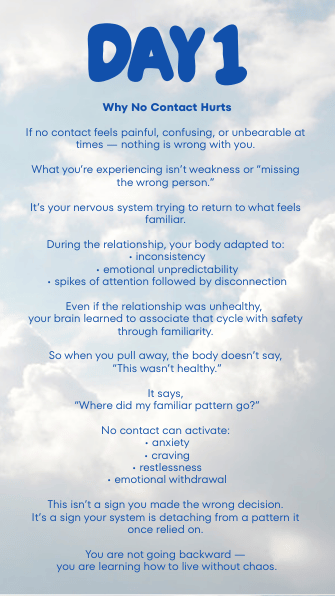
Toxic love keeps your body in a constant state of fight-or-flight. That’s why you feel anxious, exhausted, or even physically ill after leaving. Healing means teaching your body that safety doesn’t come from them — it comes from you.
Start small:
- Breathe deeply. Long exhale = calm body.
- Move your body. Shaking, dancing, walking, stretching — all release stored stress.
- Create gentle structure. Regular meals, sunlight, rest. Stability tells your body it’s safe again.
Rewrite Your Inner Dialogue
The words you speak to yourself become your new reality. After being gaslit or criticized, it’s normal for your self-talk to echo their voice. Interrupt it. Replace it. When the voice says, “You’re not enough,” answer back:
“I was too much for someone who wasn’t ready for real love.”
Affirmations aren’t cheesy — they’re reprogramming. You’re reclaiming your mind, one thought at a time.
Rediscover Who You Are Without Them
Toxic relationships make you shrink to fit someone else’s comfort. Healing is the expansion that follows.
Ask yourself:
- What do I love when no one’s watching?
- What parts of me went quiet that are ready to be loud again?
- What does peace actually feel like in my body?
Start living in ways that answer those questions. Let your joy be the rebellion.
Replace Closure With Clarity
You don’t need an apology to move on — you need understanding. Reflect on the lesson, honor your growth, and remind yourself that peace doesn’t need permission.
Surround Yourself With Safe Energy
Healing in isolation is hard. Find spaces where softness is celebrated — supportive friends, healing communities, women who remind you that love doesn’t have to hurt.
Feel the Grief Without Judgment
You might still cry, still miss them, still dream about what could’ve been. That doesn’t mean you want them back — it means your body is processing pain. Let the tears cleanse instead of shame you. Grief is proof that you tried.
Reconnect With Your Body
After emotional trauma, you can feel disconnected — like you’re floating outside yourself. Ground back in through touch, movement, and presence. Try: warm showers with intention, yoga, dancing, or placing your hand on your heart and saying, “I’m safe now.”
Start Building a Life That Feels Like Peace
Don’t rush into distractions or “replacements.” Instead, build a life so nourishing that chaos feels foreign. Create morning rituals, fill your home with beauty, plan solo adventures, learn something new.
The best revenge is peace that doesn’t include them.