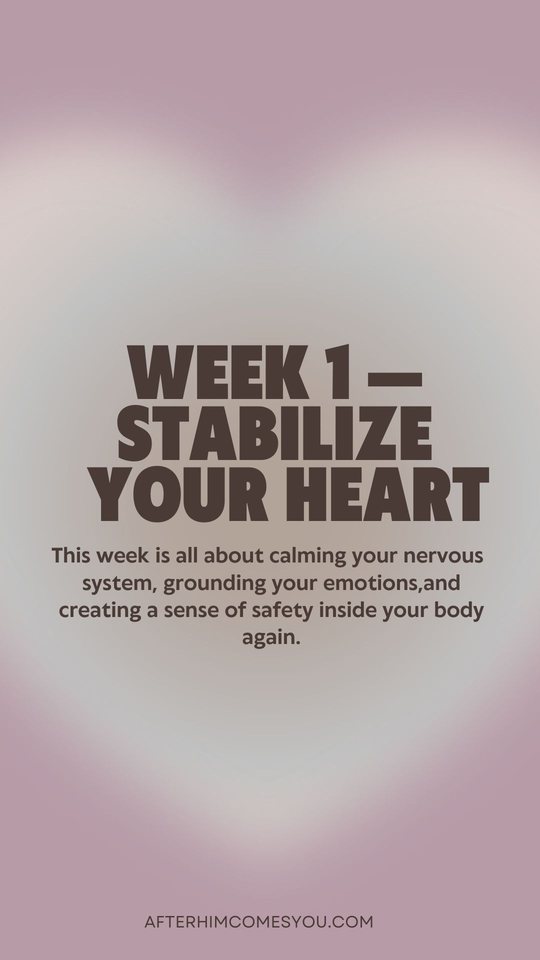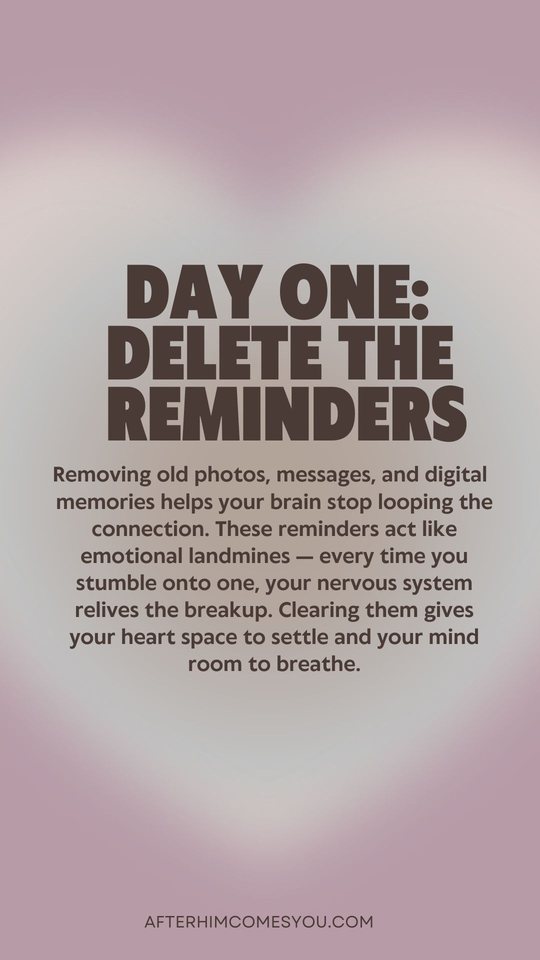
Breakups don’t just hurt your heart — they shake your entire system.
Your mind, emotions, routines, nervous system, identity, and sense of safety all get disrupted at once. And when you’re in that level of emotional shock, it’s almost impossible to know what to do next.
You might feel overwhelmed… numb… anxious… lonely… or like you’re holding yourself together one breath at a time.
And that’s exactly why you need a healing plan.
Not to move on overnight. Not to pretend the pain isn’t real. But to give your heart, mind, and body a soft, steady roadmap back to stability.
Let’s talk about why that roadmap matters more than you think.
Your Brain Craves Structure During Emotional Chaos
Heartbreak creates the same internal chaos as withdrawal. Your brain, your attachment system, and your nervous system are all scrambling to regain a sense of predictability.
When you don’t have a plan, you spiral. When you do have a plan, you stabilize.
A healing plan gives your brain:
- Something to focus on
- Something to follow
- Something that feels safe
Even tiny steps — a walk, a journal prompt, a moment of truth-telling — help interrupt emotional overwhelm and bring your nervous system out of panic mode.
Structure doesn’t heal everything… but it keeps you from drowning in the early waves.

Breakups Trigger Survival Mode — A Plan Helps You Regulate
After a breakup, especially a toxic or confusing one, your body isn’t just sad. It’s dysregulated.
You may experience:
- Heart racing
- Anxiety spikes
- Loss of appetite
- Overthinking
- Difficulty sleeping
- Emotional numbness
- Urges to reach out to the person who hurt you
This isn’t weakness. It’s biology.
A healing plan gives you regulation-focused actions that help you feel calmer, safer, and more grounded in your own body. These small daily steps are how you signal to your nervous system:
“I’m okay. I’m safe. I can heal.”
Without a Plan, You Fall Back Into Old Patterns
In the first days after a breakup, it’s easy to:
- Stalk their social media
- Re-read old messages
- Romanticize the relationship
- Break no-contact
- Blame yourself
- Try to “fix” what wasn’t yours to fix
A healing plan keeps you moving forward, not falling backward.
It’s not about perfection — it’s about support. Daily actions create momentum, and momentum breaks cycles.
Healing Happens in Small, Repeatable Steps
Most women think healing happens in big breakthroughs — it doesn’t. It happens in tiny shifts:
- Drinking water
- Going for a walk
- Cleaning one corner of your space
- Getting sunlight
- Writing the truth instead of the fantasy
- Talking to someone who makes you laugh
These small steps compound. They rebuild your emotional stability. They help you become the version of yourself who can finally let go.
A healing plan gives these steps direction.
A Plan Helps You Feel in Control Again
Heartbreak makes everything feel out of control. Your emotions, your thoughts, your habits, your future — all uncertain.
A healing plan puts the power back in your hands.
Even if the relationship didn’t end on your terms, your healing can.
A daily action gives your heart something steady to hold onto when everything else feels shaky.